UGC for brands
UGC Ads That Stop the Scroll: Hooks, Scripts and Real Examples
What makes UGC ads different
UGC ads are short videos made by a real person, filmed the way you would film a regular post, that a brand then runs as paid ads. No studio set. No booming narrator. Just somebody in a kitchen, holding the product, talking to you like a friend would. That is my lane: I am a GenX UGC creator and model and a Navy veteran, and I make talking-head videos, product demos, lifestyle clips and b-roll for brands.
Why does the casual look work? Because it reads like peer content, and people lean hard on what other people say before they buy. The cleanest numbers I know of on that come from product review data, not from a UGC study, so treat them as a close cousin of the idea and not as proof. Northwestern's Spiegel Research Center, working with 2017 data from the review vendor PowerReviews, found that a product with five reviews was 270% more likely to be bought than a product with none (Spiegel Research Center report (opens in a new tab)). The same research found reviews lifted conversion 190% for lower-priced products and 380% for higher-priced ones (Spiegel Research Center (opens in a new tab)).
Now, a UGC ad is not a review. It is an ad, and the law treats it like one (more on that below). But the instinct behind it is the same: buyers want to hear from somebody like them before they spend money. And my fellow Gen Xers have seen every infomercial ever made. We can smell a fake script from the parking lot.
If you are brand new to creator content, start with my pillar guide, UGC for brands, then come back here for the build.
The anatomy of a UGC ad script
A good UGC ad script has six beats. The order can flex (sometimes the demo is the hook), but if one goes missing, the video tends to feel like it is wandering. Here they are, with sample lines I wrote for this post about a made-up drink mix. They are samples, not quotes from my videos.
| Beat | What it does | Sample line (written for this post) | Compliance check |
|---|---|---|---|
| Hook | Stops the scroll with a question, a POV, a joke or a visual surprise | "POV: you swore you'd drink more water this year." | No health promise in the hook. A question is not a claim, so keep it that way. |
| Problem | Names the buyer's real frustration in their own words | "Plain water and I are not on speaking terms." | Only describe an experience the creator actually had. |
| Demo | Shows the product in use, hands on, in a real setting | "One packet, one glass, stir. That's it." | The creator must have really used the product. |
| Proof | Gives the viewer a reason to believe, in plain words | "I've had it every afternoon this week." | Only if true. No disease claims and nothing the brand couldn't prove itself. |
| Call to action | Tells the viewer exactly one thing to do next | "If you want to try it, it's linked here." | One ask. Do not add new claims at the end. |
| Disclosure | Tells the viewer about the brand connection | "Ad. The brand sent me this to try." | Said or shown inside the video, in plain words like ad or sponsored. |
A few notes on the beats:
- Hook. This is the whole ballgame. If the hook misses, the rest of the video never gets its chance.
- Problem. One problem, in the buyer's words, not the marketing team's.
- Demo. The product in hands, in use, in a real kitchen or bathroom or car. Not floating on a white background.
- Proof. Plain, honest, specific. "I've had it every afternoon this week" beats "life-changing" every single time, and it only works if it is true.
- Call to action. One ask. Not "follow, like, comment, shop, and tell your mama."
- Disclosure. Inside the video, in plain words. I will get to why.
UGC hooks that stop the scroll
The hook has one job: earn the rest of the video. Here are four hook styles I use, with real examples from my own TikTok.
Question and POV hooks
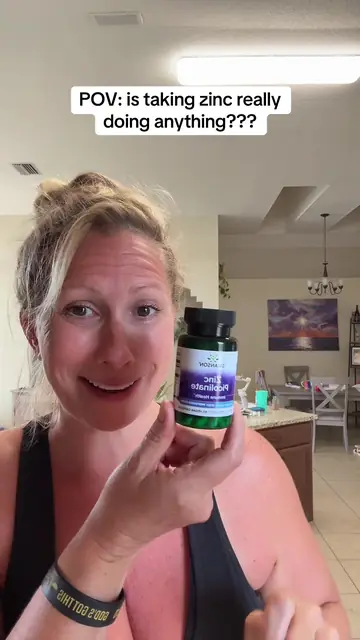
Ask the question your buyer is already asking in their head. My zinc video opens with the on-screen text "POV: is taking zinc really doing anything???" That is a question real people have, and it is phrased the way they would say it.
Notice what that hook does not do: it does not promise anything. That matters. A question hook for a supplement has to be followed by honest stuff, like the routine, the taste, the packaging or how easy it is to take. It should never be followed by "and now I never get sick." I will show you the rule behind that in a minute.
Humor hooks
My energy drink video opens with "'Patiently' waiting for tomorrow's energy drink" while I wait on the couch and the drink sits on the kitchen counter. The air quotes around patiently do all the work. GenX speaks fluent sarcasm, and a little self-aware humor tells the viewer, "relax, I'm a person, not a billboard."
Extreme close-ups
Sometimes the hook is visual, not verbal. My beef tallow skin care video opens on an extreme close-up of my eye. You do not need a single word for a shot like that to make a thumb stop and go, "wait, what?"
Comment-reply hooks
My protein powder video is built as a reply, with the line "I love replying to comments about my favorite protein powder." Replying to a comment borrows a question the audience already asked, so the setup writes itself.
Supplements
Zinc supplement
Hook: “POV: is taking zinc really doing anything???”
Cover frame: Trish holds up a bottle of zinc supplements in her kitchen
Watch on TikTok: Zinc supplement (opens in a new tab)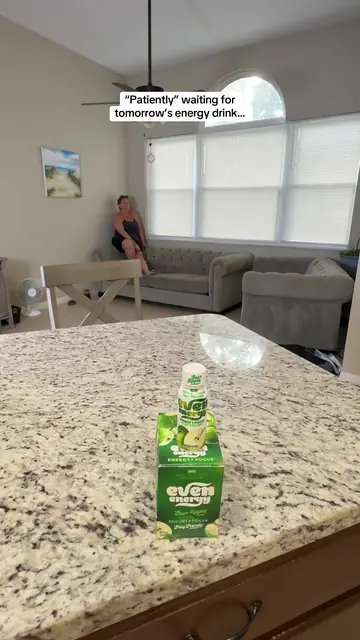
Food and drink · TikTok Shop
Energy drink
Hook: “‘Patiently’ waiting for tomorrow’s energy drink...”
Cover frame: Trish waits on the couch while an energy drink sits on the kitchen counter
Watch on TikTok: Energy drink (opens in a new tab)These are my own TikTok posts, shown as samples of my work. TikTok Shop videos can earn me a commission when viewers buy through them. A product appearing here does not mean that brand hired me.
These are my own organic posts. They are not paid ads and not client work, and showing a product does not mean that brand hired me. They are here as real hook examples.
Hooks are the whole idea behind my Control the Scroll talk ("How to Grab Attention with Unlimited Content Ideas"). You can see it on my speaking page.
How to write a UGC ad script that sounds human
You do not need a long brief to get a good UGC ad script. You need four habits.
- Talk like the buyer. Use the words your customers use in reviews, DMs and comments. If your customers say "it doesn't clump," do not make the creator say "superior solubility."
- One benefit per video. One video, one point. If your product does five things, that is five videos, which is great news because it means five chances to find a winner.
- Show the product in use. Hands on the product. Pour it, shake it, open it, apply it. The demo is where trust gets built.
- One call to action. Tell the viewer the one thing to do next, then stop talking.
Here is the simple UGC script template I would hand any brand. Fill in the brackets and give it to your creator as a guide, not a word-for-word script:
- Hook: [the question or feeling your buyer already has]
- Problem: [one sentence, in your buyer's words]
- Demo: [the product in use, hands on, in a real setting]
- Proof: [what the creator actually noticed, only if it is true]
- Call to action: [one ask]
- Disclosure: [ad or sponsored, said or shown in the video]
Let the creator say it their way. A script that a real person would never say out loud is the fastest way to make a UGC ad look like a regular ad.
Claims you cannot make, even in a casual video
This is the part brands skip and should not. A UGC ad is an endorsement, and endorsements have rules. Supplement and health brands get the closest look. This is general information, not legal advice, so have your own counsel review scripts for those products.
- No disease claims for supplements. A supplement cannot claim to diagnose, treat, cure or prevent any disease. That language comes straight from the required label disclaimer in 21 CFR 101.93 (opens in a new tab). So "POV: is taking zinc really doing anything???" can never be answered with "yep, no more colds."
- Testimonials cannot say what the brand could not prove. The FTC's Health Products Compliance Guidance (opens in a new tab) says advertisers should not make claims through consumer testimonials that would be deceptive or could not be substantiated if the advertiser made them directly. If a creator says "it fixed my joints," that claim needs the same proof as if you had said it yourself.
- The creator must have used the product. Under the FTC Endorsement Guides, when an ad says the endorser uses the product, the endorser must have been a bona fide user (opens in a new tab) when the endorsement was given. The FTC also tells creators flat out that they cannot talk about their experience with a product they have not tried.
- No fake reviews. The FTC's 2024 final rule on fake reviews and testimonials (opens in a new tab) covers reviews by people who do not exist, including AI-generated ones, and reviews by people with no real experience with the product.
UGC works best when the creator ALREADY uses the product. That is the whole point. And I do not do alcohol, tobacco or gambling at all.
Put the disclosure inside the ad
If a brand pays a creator or gives them free product, that is a connection the viewer should know about. The Endorsement Guides spell out that free or discounted product counts, even when the brand did not require a post in return (16 CFR 255.5 (opens in a new tab)).
Where the disclosure goes matters as much as what it says. The FTC's Disclosures 101 for Social Media Influencers (opens in a new tab) says that in a video, the disclosure should be in the video itself and not just in the description. It also says plain words work: "ad," "advertisement," "sponsored," or a simple line like "Thanks to [brand] for the free product." Skip vague tags like "sp," "spon" or "collab."
I would rather say it on camera and put it on screen. It costs almost nothing and it protects both of us.
Test UGC hooks, not just videos
Here is where brands leave money on the table, in my opinion: they order one video, run it, and decide UGC "doesn't work." Instead, order several hooks for each product in a monthly batch. Same demo, same body, different openings. Then run them and keep what wins.
The usual places to run them as ads:
- TikTok Spark Ads let advertisers run organic TikTok posts as ads, including posts made by other creators with their authorization (TikTok Ads Help Center (opens in a new tab)). I break it down in my guide to TikTok Spark Ads.
- Meta Partnership Ads run creator content as ads on Facebook and Instagram. In 2025, Meta added the option to feature just one partner in the ad header (Meta for Business (opens in a new tab)).
Not sure which formats to test first? My post on the types of UGC videos walks through the main ones, and my portfolio shows what I make.
The way I like to work is simple: a batch of videos plus b-roll every month, delivered to your Google Drive, on a monthly retainer or per project. If you want the ads run too, I quote UGC and paid ads together with my ads partner. All of it lives on my Work With Me page.
Questions people ask
What is a UGC ad?
A UGC ad is a short video made by a creator in the casual style of a regular social post, which a brand then runs as a paid ad. On TikTok it can run as a Spark Ad, and on Facebook and Instagram as a Partnership Ad.
Can a UGC ad make health claims about a supplement?
Not disease claims. A supplement cannot claim to diagnose, treat, cure or prevent any disease, and the FTC says a testimonial cannot carry a claim the brand could not prove if it said it directly. This is general information, not legal advice, so have your own counsel review supplement scripts.
Do UGC ads need #ad in the video?
If the creator has a connection to the brand, including free product, the FTC says to disclose it clearly. In a video, the disclosure belongs in the video itself, not only in the description. Plain words like ad, advertisement or sponsored work. A hashtag is fine but not required.
What makes a good UGC hook?
A good hook names something the viewer already thinks or feels, right away and in plain words. Questions, POV setups, a little humor, an extreme close-up or a reply to a comment all work. Write several hooks for the same product and test them.
References
- How Online Reviews Influence Sales (full report) (opens in a new tab). Spiegel Research Center, Northwestern University (2017 data from PowerReviews, a review vendor).
- How Online Reviews Influence Sales (opens in a new tab). Spiegel Research Center, Northwestern University (PowerReviews data).
- Disclosures 101 for Social Media Influencers (opens in a new tab). Federal Trade Commission.
- 16 CFR 255.1: General considerations (FTC Endorsement Guides) (opens in a new tab). Legal Information Institute, Cornell Law School.
- 16 CFR 255.5: Disclosure of material connections (opens in a new tab). eCFR (FTC Endorsement Guides).
- Federal Trade Commission Announces Final Rule Banning Fake Reviews and Testimonials (opens in a new tab). Federal Trade Commission (press release, August 2024).
- Health Products Compliance Guidance (opens in a new tab). Federal Trade Commission.
- 21 CFR 101.93: Certain types of statements for dietary supplements (opens in a new tab). Legal Information Institute, Cornell Law School.
- About Spark Ads (opens in a new tab). TikTok Ads Manager Help Center.
- Meta at IAB NewFronts 2025 (opens in a new tab). Meta for Business.
Keep reading
Types of UGC Videos: The 5 Formats Brands Actually Run
Talking head, yap style, lifestyle, product demo and b-roll: the five types of UGC videos I make, what each one does, and how to brief it.
TikTok Spark Ads: Running a Creator's Video as Your Ad
TikTok Spark Ads let a brand run a creator's real post as an ad. Here's how the authorization code works, how it compares to whitelisting and Partnership Ads, and what to put in writing.
Start here
UGC for Brands: The Grown-Up Guide to Creator Videos That Sell
What UGC means for a brand, where it runs, which rights to get in writing, and why households headed by Gen X are worth a creator who looks like them.