UGC for brands
TikTok Spark Ads: Running a Creator's Video as Your Ad
What TikTok Spark Ads are
TikTok Spark Ads are TikTok's own format for putting a real organic post behind ad spend. TikTok's help center calls Spark Ads "a native ad format" that lets advertisers use organic TikTok posts and their features in their advertising (TikTok Ads Manager Help Center (opens in a new tab)). Those posts can be the brand's own, or posts made by other creators, with their authorization.
That second part is where I come in. I'm Trish Leto, a GenX UGC creator, model and Navy veteran in Tampa, and I make short videos for brands: talking heads, "yap" style, lifestyle, product demos and b-roll. When a brand wants a creator's video to show up in the For You feed as an ad, and not just sit on a product page, Spark Ads is TikTok's built-in way to do it.
Here's the short version, in plain English:
- A Spark Ad looks and behaves like a regular TikTok post, because it is one.
- The post can come from the brand's own account or from a creator's account.
- A creator's post needs the creator's permission, and that permission comes as a code.
If you're still deciding whether you need a UGC creator or an influencer in the first place, start with UGC vs influencer and my grown-up guide to UGC for brands.
How the Spark Ads code works (as of October 2026)
TikTok updates its menus often, so treat these steps as a snapshot of its help pages as of October 2026. If a button has moved, the help pages win.
The creator's side
Per TikTok's help page on creating Spark Ads for Smart+ campaigns (opens in a new tab), the creator:
- Allows authorized posts in the app, under Settings and privacy, then Privacy (or under Creator tools).
- Opens the post, taps the three dots and taps Ad settings.
- Agrees to TikTok's advertising content terms and turns on the Ad authorization toggle.
- Generates a video code and picks how long it lasts: 7, 30, 60 or 365 days.
- Taps Copy code and sends it to the brand.
TikTok's Spark Ads creation guide (opens in a new tab) describes the same short path: go to the video, tap the three dots, tap Ad settings, then tap Generate to get the post code. That code is what people mean when they say "send me your Spark Ads code."
The brand's side
Once the brand has the code, the same Smart+ page says to go to Tools, then Creative library, then Spark Ads posts, click Apply for Authorization, paste the code into the search bar, search, and confirm the post. From there, the authorized post can be picked as the creative when the ad is built.
Two details from TikTok's creation guide are worth knowing before anyone hits publish:
- The caption is locked. TikTok says you can't edit a post's caption after it's been authorized as an ad, so agree on the final caption first.
- Private becomes public. A private video becomes public once it's used in a campaign, and its privacy setting can't be changed during the promotion.
Duets and Stitches are a special case. TikTok's Smart+ page says a post that features two creators needs a video code from both of them.
Spark Ads vs whitelisting vs Partnership Ads
"Whitelisting" is a word you'll hear a lot in creator deals, and it's fuzzy. It's industry shorthand for running ads through a creator's account. You won't find a button called whitelisting in either ads platform. On TikTok, the official format is Spark Ads. On Facebook and Instagram, it's Partnership Ads. In May 2025, Meta said that where Partnership Ads used to list both the advertiser and a partner in the ad's header, advertisers can now feature just one partner in the header on Facebook and Instagram (Meta for Business (opens in a new tab)).
So when a brand asks about UGC whitelisting, the real questions are: which platform, whose account shows on the ad, and for how long. Here's how the common options line up:
| Option | Account the ad runs from | Permission needed | Where engagement goes |
|---|---|---|---|
| TikTok Spark Ads with a creator's post | The creator's TikTok account | A video code the creator generates, good for 7, 30, 60 or 365 days | The creator's original organic post |
| TikTok Spark Ads with the brand's own post | The brand's own TikTok account, linked as the ad identity | None from a creator for the post itself (usage rights still apply if a creator made the video) | The brand's original organic post |
| Meta Partnership Ads | The brand's ads, with the partner listed in the ad header (since May 2025 the partner can appear alone) | The creator agrees to partner with the brand on Facebook or Instagram | Not covered by the sources here; check Meta's current help pages |
| "Whitelisting" (industry term) | The creator's account | Access to run ads through the creator's account, agreed in the contract | Depends on which platform format is used |
| Brand uploads the UGC file as a normal ad | The brand's own account | A written license for paid use, since the creator is ordinarily the author | The brand's ad itself |
The last row is the least fancy option: the brand gets the raw video files and uploads them as its own ad. No code, no creator handle in the header, just a license. Under U.S. copyright law, the author is ordinarily the person who actually created the work (U.S. Copyright Office (opens in a new tab)), so paid-ad use belongs in writing. My post on UGC usage rights covers what to ask for.
Why brands and creators both like Spark Ads
The big structural difference is where the engagement lands. TikTok's About Spark Ads page (opens in a new tab) says all of the engagement on a Spark Ads post is attributed to the original organic post. The likes, comments and shares the ad earns pile up on the real post, not on a separate ad copy.
For a brand, that means the ad carries its social proof with it and looks native, because it is native. For a creator, it means the post keeps what the ad budget brings in. That's a fair trade, as long as the paperwork is clear about which post, for how long, and for what.

Who you reach on TikTok (and why grown-up brands add Meta)
Spark Ads only run on TikTok, so it's worth knowing who's there. Pew Research Center's 2025 survey of U.S. adults found TikTok use drops with age: 63% of adults 18 to 29 use it, compared with 44% of those 30 to 49, 30% of those 50 to 64 and 12% of those 65 and older (Pew Research Center (opens in a new tab)).
That's not a reason to skip TikTok. Thirty percent of 50 to 64 year olds is still a big crowd. But the same Pew data shows 74% of adults 50 to 64 use Facebook and 40% use Instagram. If your buyer is my generation or older, pairing TikTok Spark Ads with Meta Partnership Ads, cut from the same batch of videos, puts your product in front of them in more of the places they already spend time.
That's why I think in batches, not one-offs. A talking-head hook, a product demo and a few seconds of b-roll can be cut into a TikTok post, a Reel and a plain uploaded ad. For hooks and scripts that land with grown-up buyers, see UGC ads: hooks, scripts and examples.
Disclosure still applies to Spark Ads
Putting ad spend behind a post doesn't make its disclosure duties go away. TikTok's Branded Content Policy (opens in a new tab) defines branded content as content that promotes or reviews a third-party brand or its products or services "in exchange for payment or any other incentive." "Any other incentive" is broad. The policy also has creators turn on TikTok's content disclosure setting for branded content, and it makes the creator responsible for following the law.
The FTC is just as clear about video. Its Disclosures 101 guide for influencers (opens in a new tab) says the disclosure should be in the video, not just in the description uploaded with it. So the hook can be playful, but the disclosure can't be hiding.
And for the record: a product showing up in one of my own videos is my content. It is not proof that the brand hired me, and I won't present it that way. This section is general information, not legal advice.
Spark Ads rights and pricing: what to agree on
A Spark Ads code is permission for one post, for a set number of days. A good agreement spells out everything around it. Here's the checklist I'd hand any brand:
- Which posts. List each video by link.
- How long. 7, 30, 60 or 365 days. Heads up: TikTok says Spark authorization requests sent through its Content Suite default to 365 days (TikTok Ads Manager Help Center (opens in a new tab)). If the deal is 30 days, write 30 days.
- Where else it runs. TikTok only, or Meta Partnership Ads and the brand's own uploads too.
- The final caption. It's locked once the post is authorized.
- Disclosure. Who turns on the content disclosure setting, and what the in-video disclosure says.
- Raw files. Whether the brand also gets the clean video and b-roll for its own ads.
On price, I'm not going to throw a number at you here, because every package I put together is a custom quote. What I can share is how the market talks about it. One vendor pricing guide on ppc.io (opens in a new tab), a vendor blog and not a study, says some brands pay an extra 30% to 100% of the base fee per month for permission to run ads through the creator's account. Treat that as a rough range you'll hear quoted, not a rate card.
Running UGC as Spark Ads (or Partnership Ads) with me
Here's how I work: batches of videos plus b-roll, delivered to Google Drive, on a monthly retainer. Talking heads, yap style, lifestyle and product demos. The niches I cover include supplements and food, pets, cars, kitchen and gardening, and makeup, skin care and hair care. Not a fit: alcohol, tobacco or gambling.
If you want those videos running as ads, my UGC + ads packages pair my videos with my ads partner. That can mean UGC run as Meta or TikTok ads with retargeting, or a TikTok Shop launch with TikTok ads behind the product demos. Want a video posted on my own TikTok so it can run as a Spark Ad from my account? Ask me, and we'll talk it through.
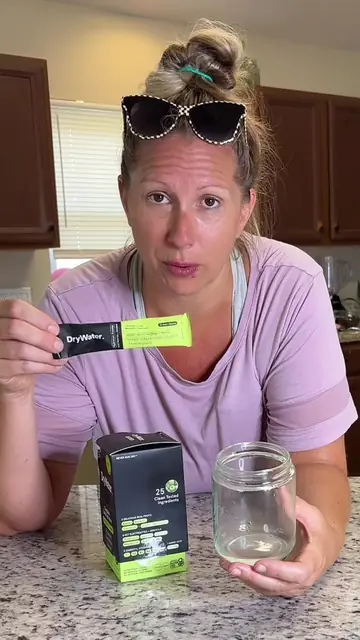
Here's one of my own TikTok Shop product demos, so you can see the style. It's my content on my account. I'm not claiming it ran as a Spark Ad, and showing the product doesn't mean that brand hired me.
TikTok Shop · Product demo
Hydration sticks
Unboxing-style demo: the stick pack, the box and the glass.
Cover frame: Trish holds up a hydration drink stick pack beside its box
Watch on TikTok: Hydration sticks (opens in a new tab)These are my own TikTok posts, shown as samples of my work. TikTok Shop videos can earn me a commission when viewers buy through them. A product appearing here does not mean that brand hired me.
If you've got a product and a TikTok or Meta budget, let's make you a batch of videos worth spending it on.
Questions people ask
What is a Spark Ads code?
It's a video code a creator generates in the TikTok app for one post (three dots, then Ad settings, then Generate). The brand pastes it into TikTok Ads Manager to apply for authorization to run that post as a Spark Ad. Steps are per TikTok's help pages as of October 2026.
Is Spark Ads the same as whitelisting?
Not exactly. Whitelisting is industry shorthand for running ads through a creator's account. Spark Ads is TikTok's own ad format for running organic posts, including a creator's post with their authorization. On Facebook and Instagram, the closest format is Partnership Ads.
Do Spark Ads need a paid partnership label?
If the post promotes a brand in exchange for payment or any other incentive, TikTok's Branded Content Policy treats it as branded content, and the creator turns on TikTok's content disclosure setting. The FTC also wants the disclosure in the video itself. This is general information, not legal advice.
How long does Spark Ads authorization last?
The creator picks 7, 30, 60 or 365 days when generating the code, per TikTok's help pages as of October 2026. TikTok says requests sent through its Content Suite default to 365 days, so put the agreed length in writing.
References
- About Spark Ads (opens in a new tab). TikTok Ads Manager Help Center.
- How to create Spark Ads for Smart+ Campaigns on TikTok Ads Manager (opens in a new tab). TikTok Ads Manager Help Center.
- Spark Ads creation guide (opens in a new tab). TikTok Ads Manager Help Center.
- How to use Content Suite to create and launch Spark Ads (opens in a new tab). TikTok Ads Manager Help Center.
- Meta at IAB NewFronts 2025 (opens in a new tab). Meta for Business.
- Social Media Fact Sheet (opens in a new tab). Pew Research Center.
- Branded Content Policy (opens in a new tab). TikTok.
- Disclosures 101 for Social Media Influencers (opens in a new tab). Federal Trade Commission.
- UGC Pricing (vendor blog) (opens in a new tab). ppc.io.
- Circular 30: Works Made for Hire (opens in a new tab). U.S. Copyright Office.
Keep reading
UGC Ads That Stop the Scroll: Hooks, Scripts and Real Examples
How a UGC ad is built, beat by beat: the hook, the script, the demo and the disclosure. Plus real hook examples from my own videos and the claims a brand can never put in a creator's mouth.

UGC Usage Rights: A Plain-English Guide for Brands
Who owns a UGC video, what organic, paid, perpetual and creator-account usage mean, what vendor rate guides say they add, and a contract checklist for brands.
Start here
UGC for Brands: The Grown-Up Guide to Creator Videos That Sell
What UGC means for a brand, where it runs, which rights to get in writing, and why households headed by Gen X are worth a creator who looks like them.